Thursday, February 05, 2026

A Humanist Manifesto for Our Times

Liberals don't *necessarily* hate Donald Trump.* Rather, we hate what he stands for.

So, what does Donald Trump stand for? 

Nothing! Literally, nothing.

Trump has no principles. He has no core beliefs. He doesn't believe in science, or religion, or philosophy, or art, or evolution, or climate change, or rationality, or progress, or diversity, or law, or human rights. 

Nothing.

Notice that these things that he doesn't believe in are the very things that form the fundamental core(s) of the Enlightenment. They represent what liberals/progressives see as the pathways to peace, equality, justice, and progress.

In tossing these fundamental values aside, Trump attacks the very center of liberals' self-identities. We see ourselves as not just creatures--animals--but as *humans*--aspirants to the divine. Through self-cultivation (character) and education, we aspire to achieve a world *on earth* of everlasting love and beauty: poetically, a "kingdom of heaven on Earth." 

The Trumpian alternative to Enlightenment values and aspirations is a life of mutual strife, where power and self-interest prevail: a war of all against all, in which those with resources hoard those resources for themselves and their allies, building walls to keep out those they see as "other" or "less than." In this way, those who reject the Enlightenment, like Trump, are nothing more than creatures, allying themselves with other creatures only to protect themselves and their own interests, competing against other creatures, to the death. Their relationships are all transactional ("What’s in it for me and mine"). They are nothing but linguistic animals.

In accepting Trump, MAGA followers and others who voted for their own perceived interests, have rejected the alleged superiority of liberals' social compact. Most poignantly, they have rejected the alleged superiority of education, culture, ethics, democracy, personal restraint, respect for others, and the post-WWII world order. The have rejected the idea that *any* human can achieve personal salvation on Earth through study, devotion, or personal transformation. 

In short, followers of Trump reject *us* as liberals, as embodiments of everything they hate about the modern world.

Thus, the current battle for the soul of our nation is a battle for the future of democracy, as an ideal in which the potentials of each human being are valued equally, as holy and immeasurably worthy, and the best direction for society and the world is the realization of *every person's* unique potential in collaboration with all other persons. This ideal is equivalent to the "heaven on earth" ideal of progressive Christianity, reform Judaism, and the ideals of other peace-loving believers around the world.

The fight for the soul of America *is* the fight for the soul of humanity itself.

We must join the (non-violent!) fight in this spirit.

--------------------------

*Many liberals *do* hate Donald Trump. Others of us feel very sorry for him for being psychologically damaged beyond repair. 

Wednesday, October 23, 2024

What does America want in a president?

It's unbelievable to me that this election is actually close. (At least, it is close according to many polls.)

I do understand that for many people, Kamala is a relatively unknown public figure. She hasn't been out there on the national stage for decades like, say, Joe Biden. And she's not a naturally charismatic figure like Bill Clinton or Barack Obama.

But her values are clear: she favors abortion rights, equal protection of the law, democracy as a governing approach, and dignity and opportunity for all people, regardless of race, gender, religion, national origin, or sexual orientation. She favors continuity in the norms and traditions that continue to make America a great country.

Kamala's values aren't hidden. They aren't secret. She's lived them consistently her entire life. Plus she's happy and is honest about who she is.

What's more, Kamala's values offer a direct contrast to the "values" that Trump holds, as seen in his words and actions. His movement, "Make America Great Again," is a call to return to a previous time in which America was great--a time, apparently, which isn't now. 

Trump says America is a failing nation. He denigrates American government, military veterans, immigrants, independent-thinking women, major cities, our nation's allies, experts of all sorts including scientists, judges and the courts, journalists and honest journalism, and literally any person who thinks differently from him.

So, granting that Kamala is relatively unknown and she's actually kind of boring, why would someone support Trump? He's not unknown. Nor is he boring (although he *is* a bore).

Maybe people support him because he's a Republican? But his record represents a dramatic turn away from Republican values such as the rule of law, limited government, deficit reduction, and investments in infrastructure and basic research.

Maybe people support him because he's a conservative? But his personal behavior and profligate lifestyle suggest he is not a conservative. He allied himself with those opposed to abortion rights, but every indication is that this was an alliance of convenience, not shared values.

Maybe people support him because he represents a sharp departure from the past? But he *was* president, and even before his heinous actions on January 6th, Americans overwhelmingly voted him out of office after just one turn.

So, why do people support him now? 

I think the true answer is that many Americans are tired of politics as traditionally practiced in America with fairly minor readjustments every few years when a new party is elected to the White House, maintaining our historic and widely-shared set of core values with a few disagreements at the fringes.

But what attracts people to Trump is not values, or beliefs, or character, or continuity with the approaches of the past. 

What attracts people to Trump is his outrageousness: his flippant disregard for traditions and norms that have kept our country stable and united for generations. Trump is a disruptive disruptor, offering to come in and turn over the table, ending the game as it's been traditionally played and flinging ketchup at the wall for good measure. 

This is what Trump did during his first term. And, it seems, there are many people who didn't get enough disruption, who want more.

People also want someone who gives voice to their own grievances, about the world not being as they think they were promised it would be. These people want someone who stokes their anger and points his finger at "Other people" who can be blamed for everything, and incites the fear of this Other as a psychological drug that temporarily hides every personal pain or personal failure. These people want the drug that Trump promises them.

Well, if these people get what they want, they'll get their disruption beginning in January. And I'm going to bet that his supporters will gradually abandon him, as he once again demonstrates that he might be an entertaining candidate, offering a daily carnival show complete with hyperbole and innuendo and downright gross behavior and the promise of Soma to soothe their souls, but he's a terrible public servant.

He won't be a good president. 

You think people would remember this from Trump's first term. But, apparently, their memories are short and their desire to be entertained and anesthesized is much stronger than their commitment to American values. 

So, America, which do we want: a fairly boring, competent, joyful public servant? Or a loud, outlandish, and predictably unpredictable fool?

Monday, September 16, 2024

The Very Real Fear of Communism in Today's America

Saturday evening, I went to a bar in downtown Sarasota. As soon as I sat down, the guy sitting next to me saw my Kamala hat. He immediately launched into a diatribe: 

"She's a COMMUNIST! She HATES OUR COUNTRY!!  *YOU* must HATE our country!!!"

I just smiled and nodded, saying "Oh, really?!" and looking plaintively at the bartender, who looked on somewhat alarmed.

The guy finished his spiel, got up, and walked out. The bartender (who was new) came over and said "I'm sorry!" I said, "Thank you, but it's not your fault. I guess it's my fault for wearing this hat in public."

--‐‐-----------------------------

But Kamala Harris is not a communist.

A communist believes that the state (or the people) should own the means of production. Communist countries typically nationalize businesses and limit the ability of individuals or groups to engage in private activities or to choose their own ways of life.

As part of the typically-forcible take-over of countries by communist groups, often involving coups by segments of the military, individuals are often driven from their homes, exiled, imprisoned, or killed, all in the name of a vision of collective cooperation for the greater good. (Of course, not all authoritarian governments are communist, but that's another matter.)

Americans have been afraid of socialism (and its cousin, communism) since at least the 1840s, when a series of labor strikes and armed rebellions wracked the countries of Europe, fueled by both the remants of feudalism and the excesses of capitalism. Fears of these movements--as well as the action of labor movements across the country--caused the U.S. to severely limit immigration and, eventually, to regulate industries and build a social safety net (including Social Security and Medicaid). 

But fears of communism have continued, spiked by fears of the Soviet Union, mainland China, and, more recently, Norh Korea, North Vietnam, Cuba, and Venezuela. American children are taught to fear (and to hate) communism as a direct challenge to our commitment to "free enterprise."

During the 1940s and 1950s, fear of communism (as part of the so-called "Red Scare") led some Americans to call for public investigations of communist party activity, including public pledges of fealty to the United States. The excesses of these anti-communist activities caused many Americans to call for the public shaming of the most vocal anti-communists, of whom the most famous was Senator Joseph McCarthy of Wisconsin. (See https://www.senate.gov/about/powers-procedures/investigations/mccarthy-hearings/have-you-no-sense-of-decency.htm.)

More recently, Ronald Reagan called the Soviet Union the "Evil Empire," not only because of its communist ideology, but because of its attempts to spread this ideology around the world. Ron DeSantis, governor of Florida, has signed legislation specifically mandating K-12 curriculums describing "the evils of communism" and preparing "students to withstand indoctrination on Communism at colleges and universities." These actions can be seen as tactics in an ongoing culture war in which the "good guys" (American supporters of "free enterprise") must vanquish the enemies of America (the communists).

The fear of communism among Americans has waxed and waned over the past 185 years. But it never subsides for long. Communism continually re-emerges as a boogeyman, especially useful to politicians on the right who seek to scare Americans away from more liberal or left-leaning candidates. 

But it's actually extremely rare in the United States to have politicians run for higher office who proclaim allegiance to communism as an ideology. Even Bernie Sanders--one of the most liberal U.S. Senators of all times--specifically disavows communism, saying that any transfer of wealth or power from the rich to the poor should proceed by "political revolution," not violent overthrow. 

But because Sanders advocates for "Medicare for All," which amounts to a nationalized health-care system, and because he has said that important sectors of the US economy (like energy) should be creating profits "for the people," and because in his younger days he had praise for the communist governments of Cuba and Nicaragua, it is fairly easy to suggest that Sanders is secretly a communist. (https://www.hoover.org/research/how-socialist-bernie-sanders)

To those who oppose the presidential bid of Kamala Harris, it is similarly easy to conflate her liberal views with communism.  Like Sanders, Harris has also expressed support for Medicare for All. But Kamala is not nearly as liberal as Sanders. She has not praised communist countries and has never called for the nationalization of other industries besides health care. 

But never mind these subtle differences. In today's America, "communist" has become short-hand for "liberal." The claim that Kamala is a communist isn't intended as a factual or historical statement. It's pure rhetoric, designed to inflame partisanship in a certain type of American.

Because the fear of communism has been an undercurrent of anti-liberalism in the US for generations, the word itself is inflammatory: used specifically because it is a trigger for many. The soil among some is quite fertile: plant the seed, and it will grow, resulting (they hope) in anger directed at Democrats or so-called RINOs that motivates people to support self-styled anti-communists: not rationally, but reflexively, like the angry man at the bar who has been programmed to believe that anyone who supports a more liberal person for higher office is, ergo, a communist.

Saturday, September 14, 2024

On Expertise vs. Ignorance in American Culture: A "Shift-y Example

A long-ago schoolmate of mine posted this recently on Facebook:

"The Sahara going green is a 'weather shift' but not 'climate change'? Lol. Trust the media, they're on your side. Lol."

My guess is that this was prompted by a recent article on this topic that was picked up by CNN (and other media outlets). https://www.cnn.com/2024/09/13/weather/sahara-desert-green-climate/index.html

My schoolmate's Facebook post seemed designed to appeal to a certain "skeptical" type of Facebooker who likes to denigrate the media because, well, "the media" is a good whipping boy, especially the so-called "mainstream media" which is a favorite whipping boy of people with certain political leanings. 

I'm sure the post was also designed to goad people like me, who tend to trust mainstream media and to distrust some more right-leaning media outlets. In this goal, the post succeeded: I was goaded. 

So I wrote a long comment, which I've decided to share. It's been slightly edited. 

There's this thing--maybe you've heard of it--called expertise. One of the things experts do is differentiate among different types of events. This may seem to be about obfuscation--and it's one of the reasons that respect for experts has declined in our anti-intellectual culture--but differentiation between similar (but not exactly the same) concepts allows for more granular and sophisticated descriptions of facts, which results in more understanding of complexity. Understanding complexity is what science and philosophy are all about.

I'm no expert on meteorology, but because I understand the complexity of complexity (!), I tend to believe that if experts in meteorology (or geophysics) use different words or phrases to describe (even slightly) different things, maybe there's some complexity there. And if I don't understand the complexity, I don't automatically assume that the scientists are trying to stake out a political claim. (They *might* be, but making that determination might require some further inquiry.)

Take your example here. Even on the face of it, "weather shift" and "climate change" seem (to me) to describe different things. Let's see what experts say about them.

A simple Google search for "weather shift vs climate change" results in a generative a.i. response that says:

"A 'weather shift' refers to a short-term change in atmospheric conditions like temperature, rain, or wind, happening over a day or few days, while 'climate change' describes a long-term alteration in average weather patterns over a significant period, typically decades or centuries, often attributed to human activities impacting the planet's temperature and weather systems; essentially, weather is the day-to-day condition, while climate is the long-term trend."

Now, as I mentioned, this is a generative a.i. response, and while it's technically correct (in terms of how these phrases are typically used [remember, generative a.i. only "knows" what others have written]), it's not directly on point with regard to the Sahara. So let's look a little further by adding "Sahara desert" to our prompt. The prompt no longer generates an a.i. response,  because the complexity of the prompt has increased. Instead, we get links to a bunch of web sites. Scanning through the first few briefly, we can choose CNN, Quora, or maybe the web site of the American Meteorological Society (because, well, they're the experts). We find at the A.M.S. site a peer-reviewed journal article called "Northward Shifts of the Sahara Desert in Response to Twenty-First-Century Climate Change."  https://doi.org/10.1175/JCLI-D-22-0169.1

Look at that! Even the *title* differentiates between a [weather] shift and climate change!!

If we were actually interested in understanding how the distinction is utilized by the meteorologists who wrote the article, we could read it to learn more. Why would we do that? Maybe because *we know that we don't know as much as they do* about this topic, and that we could learn something from their expertise. 

Or, we might immediately dismiss this--or, more likely, never even engage in this inquiry--because according to our non-expertise, "weather shift" and "climate change" are exactly the same! Therefore, these meteorologists and all the other scientists who participated in the peer review process must be full of crap! Right?

Schoolmate, I know you're not an expert on meteorology. Neither am I. But some people are. Are those experts useful to us? Do we care to learn from them, or are we somehow all-knowing about meteorology without ever taking a course in that topic?

Sneering about the distinctions that experts make is both a sign of, and a facilitator of, ignorance (i.e., "not knowing"). Ignorance is what drives our culture to denigrate expertise. Ignorance is what allows non-experts to claim (falsely) that the release of massive amounts of greenhouse gasses since the 18th century is having no effect on the Earth's climate. Ignorance is what leads humans to (sometimes) engage in self-destructive behaviors. Why would you want to encourage (or display) such ignorance?

Perhaps your reason is political?


Thursday, September 05, 2024

Facebook posts about prehistoric archeology

Lately, I've heard of several people who are fascinated by some Facebook posts related to what might have happened on Earth before recorded history.

Our knowledge of prehistory is intrinsically indirect, because we don't have contemporaneous accounts. We can only *infer* what happened using a careful analysis of the (often circumstantial) evidence we do have. This kind of analysis sometimes requires deep expertise to *do* but also to understand. (For example, I recently read a discussion of the supposed lengths of the reigns of kings in Sumaria that argued that the numbers were actually intended as a lesson in quadratic equations rather than an attempt to offer a realistic chronology. I had trouble following the details.)


The stuff posted on Facebook about what "really" happened before recorded history often only mentions the "evidence" that supports a particular viewpoint. It also often ignores any scholarly analysis that might contradict the intended inference. (For example, a piece about the Easter Island statues makes it seem like it's *new* that we've learned through excavation that the "heads" actually have bodies that go many meters under the ground. It's *not* new. Plus, there are very natural explanations of how the statues were buried over time.)


An analogy I want to make is to discussions about climate change. Many scientists have concluded from the evidence (*not* actual thermometers from 1000s of years ago!) that recent warming is unprecedented in the past 100,000 years. This case is pretty solid; few reputable scientists say these data and conclusions aren't pretty reliable. (Not perfect, but very good.) And yet many climate-change skeptics argue that we don't really *know* much about temperatures on earth before about 1800.


This is very much like those Facebook posts that say we don't *know* that the Earth *wasn't* visited by gods or extraterrestrials who seeded human civilization. 


In a very limited way, the posts are right that we don't *know*. We weren't there, and neither was anyone who wrote anything down. (The cave paintings are also subject to many different interpretations.)


But direct personal experience isn't the only way to *know* anything. In trials, for example, where evidence is often circumstantial, jurors are instructed to *use their common sense* in drawing reasonable inferences.


Similarly, I think we have to use our common sense in responding to Facebook posts about prehistoric archeology. Do we have *any* actual evidence that gods or extraterrestrials have ever visited the Earth? Do we notice gods or extraterrestrials interfering in today's world? Do we wonder whether it was possible to get to the moon or build the Chunnel without divine intervention?


But wouldn't it be *totally cool* if we discovered that aliens taught early humans mathematics or philosophy or how to move enormous stones? Sure! But the possibility of something that might be *totally cool* isn't reason to think it might be true.


Occam's Razor tells us the simplest explanation for an observation is most likely to be true. What is the *simplest explanation* of those supposedly lengthy reigns of kings chronicled in ancient Sumerian tablets? Isn't it more likely that the numbers were made up as part of propaganda by people working for other rulers thousands of years later to justify their current boss's rule? Or that the tablets were intended to provide a lesson in quadratic equations in a society worried about losing that almost sacred knowledge?


You decide. ☺️

Saturday, August 24, 2024

Kamala Harris for President

I lost some long-time friends in 2016 because I called them out on what I saw as gross distortions of the choices in that election. I regret losing the friends, but I don't regret speaking out.

Lemme push back a bit on some of the comments Ive seen from Trump supporters on the 2024 election. (I'm guessing I don't have any friends left who will unfriend me for *these* comments.)

1. Kamala Harris is a smart woman. She has an undergraduate degree from one of the best universities in the U.S. and a law degree from a top-rated law school. She worked as a prosecutor for most of her life, getting elected both in San Francisco and in California. She was a senator for four years and has served as vice-president for four years. She's highly qualified to be president. 


2. The idea that she's personally responsible for everything that's wrong with America today is just crazy. The Vice President has about as much authority as a "warm bucket of spit," especially when the Congress is split between two parties. Kamala did what she could, as a loyal second to Biden, and she doesn't disown his record, but she is her own person with her own ideas, who deserves a chance to lead the country. (Serving as Vice President has been a great addition to her life-long learning, by the way.)


3. The idea that she's "incompetent" is about as clueless/brainless as one can get in 2024 America. Someone who is saying that clearly gets their news from Fox/Newsmax/OAN, and has really no basis for that opinion but...um... their American right to a foolish, untethered opinion. These people need to get out more.


4. Kamala is progressive; she believes in opportunity for ALL (immigrants, women, the disabled, LGBTQ+, Palestinians). You could call her a "liberal," but you have to remember that she believes in the rule of law and the greatness of the American story. She's no "communist" or even "socialist." (These labels are tired and should be REtired forever from political discourse.) If you want to call her something, call her a "Democrat."


5. Trump has shown us what he'll do with a second term. Should we hold him responsible for the pandemic, economic collapse, and crime wave of his years as President? Should we hold him accountable for the crimes he's been charged with and even convicted of? Should we expect him to stop name-calling and red-baiting and dog-whistling and start seriously discussing the actual job before us? Or does he get a pass for all these things because he forefronts white grievance and Christian Nationalism (not to mention the effort to turn back a woman's right to choose)?


6. Despite the MAGA claim that Kamala will destroy America if she's elected, we have to look back on the actual history of the U.S. and the actual effects of presidential actions and beliefs (even from liberal presidents) on that history. The president's powers are quite limited (Thank Goodness!), but who we choose does represent our aspirations for the future and who we choose can help shape the evolution of those aspirations.


7. There's NO doubt in my mind that Trump will win 44-47% of the popular vote in 2024. This is baked in. (The fact that America is so divided today is a lamentable thing, but that's a topic for another day.) If he's extremely lucky, he'll win the Electoral College. This election will be decided by the "UNdecideds." It's now a 74 day sprint to convince the undecideds to go with hope, optimism, and joy rather than fear, blather, and "American Carnage."


May the best candidate win. 🙏 

Tuesday, July 23, 2024

Groupthink on the Political Right; Or, What Brings All These Wackos to SouthWest Florida?

In 2019, after 30 years living in Chicago, where the Democrats have an iron grip on the electorate, I moved to SouthWest Florida, where MAGA runs wild and the Democrats can't even field a real Democrat to run against Ron DeSantis for governor (cf. Charlie Crist). 

This shift in my immediate political environment has been jarring, honestly, and I'm actually surprised I'm still here despite strong instincts to head back North. (That's another story for another time.)


But moving here has had the unintended (and initially unwelcome) effect of exposing me to the overwhelmingly White, and overwhelmingly Male, base of the GOP, and this exposure has allowed me to get a much better sense of what motivates these people to villify Democrats and to actually venerate a convicted cretin like Donald Trump.


One of the things I do pretty often here in Sarasota is I have become a regular at a couple downtown bars' Happy Hours. Fortunately, I can walk downtown, where there's a quite respectable group of restaurants and bars--much better than you'd expect from a small city like Sarasota, which has not only an interesting, financially successful citizenry (mostly from away, as they say in Maine), but also a lot of passers-through.


So I get to meet these financially successful citizens and their passing-through ilk regularly. And even though almost every bartender has banned political conversations at their bars, you can get a pretty good sense of someone's beliefs and values from a more general chat about life, work, and aspirations in general. 


And what I've learned is quite interesting, especially in light of the current political environment in the US and in Florida. 


Almost without exception, the White Males I chat with in Sarasota *hate* Democrats, *despise* the Democratically-led cities and states of the North, and *love* DeSantis and this income-tax-free "paradise." These strong beliefs motivate many of these men to move here from wherever they are from, bringing with them their hard-earned wealth and their extremely dystopian ideas about the "Hell Holes" up North like Chicago.


When I tell them I miss Chicago, I get the most interesting and vehement reactions, such as the nearly universal view that Chicago is (still!) the murder capital of the world and that the Democratic Machine is absolutely evil and completely un-democratic.


Facts be damned in these conversations: the beliefs I encounter are totally baked in, even--especially!-among people who actually lived at one time in Chicago or in similar cities North and West of the Mason-Dixon line. These beliefs provide almost certain proof that most of these men are consumers/products of FoxNews and are not-so-secret believers in tired old racial and gender stereotypes, not to mention Trump's "American Carnage" storyline.


What I hear from these men about Joe Biden, Kamala Harris, Nancy Pelosi, Hillary Clinton, Barack Obama, Gavin Newsom, Chuck Schumer, and many others, is a true caricature: a classic projection of every fear and every disgust that they were raised on, or acquired sometime during their mostly very financially-successful lives.


A sample: Joe Biden is the worst form of "bought-and-paid-for politician" in the history of the world. Kamala Harris got where she is by sleeping with every powerful man she could, and can't utter a coherent thought. Immigrants are mostly criminals and terrorists, or are lazy shifters in search of government handouts. People like Nancy Pelosi and Chuck Schumer are communists or fascists (or both?) who hate America and want to create a nanny state that eliminates free enterprise and independent thought. Northern governors like J.B. Pritzker and Gretchen Whitmer want legalized marijuana so their states' populations become addicted and easily manipulated. Academics are all elitist Marxists who think their book learning trumps common sense and everyday experience. (Okay, maybe that last one has some truth to it.)


While many of the men I talk to are truly experts in their respective occupations and seem to truly love their families, the analytical or empathetic approach they take to their work or personal lives seems to go out the window once the conversation edges toward the political. 


What's going on?


I really don't know the answer. I'm baffled by all of this. Is it the fluorine in the water? Is it COVID vaccines? Is it the result of Bill Gates' devious design of Microsoft Windows? Is it the work of the Trilateral Commission or the attendees at Davos? Is it creeping federal control of schooling in the U.S.?


Seriously, what explains the apparent takeover of (a large sector of) the political world by right-wing groupthink?


I welcome your thoughts.

Thursday, October 26, 2023

Israel's Right to Exist and to Use Public Schooling to Maintain Separate Cultural Identies for Jews and Israeli Arabs: Does This Argument Justify Similar School Segregation in the United States?

I looked for this article to better understand why many reasonable people have reacted with horror to the student positions at American universities regarding Israel's right to exist and whether the frame of "colonialism" is a justified view of the current conflict between Israel and Palestinians. 

It's worth a close read.

One aspect of it gives me some pause: the justification it tries to give for ongoing segregation of Jews and Israeli Arabs in the public schools. This segregation is necessary, the author says, to preserve both groups' right to maintain their respective cultural identities.

If someone tried to justify ongoing segregation of American public schooling according to religion or race, I believe most Americans who believe in democracy would strongly resist that. (Such resistance wouldn't, of course, remove the obvious fact that such segregation is, in fact, becoming more widespread in the U.S.)
I realize that the Jewish/Arab cultural divide in Israel is historically very different than that between, say, Blacks and Whites, or Christian Nationalists and secularists in the U.S. But I wonder if this author's justification of ongoing segregation in Israeli public schooling could be applied to the issue of segregation of American public schools. Certainly the White, Christian Nationalist perspective in the U.S. is that the argument clearly applies to current conditions in the U.S.

Can a clear position be laid out that accepts this author's argument for the ongoing segregation of Israeli public schooling while also firmly rejecting the efforts of American Christian Nationalists to further segregate (or to allow the ongoing further segregation of) American public schools? I'm not sure.

Friday, April 21, 2023

(One of) COVID's effects on schooling

One central result of the pandemic was a huge increase in both teacher and student abilities in educational technology. In a way, COVID was the killer app for EdTech.

But COVID, of course, did a lot more than get a whole bunch of people used to using Zoom. One of the most important thing that happened was that parents, all of a sudden, were able to see into the teaching/learning process going on in their public schools. For some parents, this might have been happy-making. What great teachers!!! What a great curriculum!!! What a great school system!!!

Yeah. But.

For some OTHER parents, what they saw on Zoom was not only NOT inspiring (I mean, a lot of teachers and students really had no idea what they were doing at first), but truly troubling

There are a WHOLE lot of reasons for this. First: teachers aren't perfect. They're human; they make mistakes; and (let's be honest) some of them aren't really very good at what they do.

Second: "curriculum" is one of those things (like colonoscopy?!) that most people really know little about and really DON'T want to know much about. COVID allowed (forced?) parents to see the curriculum in action, or at least see something that gave them clues about what the curriculum is in a given school. (Curriculum and instruction are very different things, as you know. But parents didn't always make this distinction.)

Third: take two people (say a random teacher and a random parent) and they will have a different set of skills, experiences, and values.  Now add a third person: a young person, a child, a student. The parent is watching the teacher (try to) teach their kid. While some parents were like "yeah, it's not great, but during the pandemic this is better than nothing" and some others were like "I LOVE my child's teacher" while a few others were really outraged like "This teacher thinks transgenderism (or the idea of structural racism or whatever) is OKAY/True/Age Appropriate?!?!?"

The combination of these three situations lead SOME parents to start to get more involved. Many talked to their friends (through masks at the local park, maybe) and realized that parental dissatisfaction wasn't just something THEY felt. Indeed, in some places it wasn't rare, but it was shared (sometimes widely among certain parent groups). This realization of shared grievance (sound familiar?) has resulted in all KINDS of parent groups and parent action and even some major political action (Glenn Youngkin, Ron DeSantis?). 

One example here in Florida is the turning over of the Sarasota School Board to a group of people who were allegedly non-partisan but were funded by Moms for Liberty and Ron DeSantis. The three had a somewhat vague agenda (Students First! Transparency! Facts, not belief!) that kind of hid a fairly radical (right-wing?) view about the relationship between schools and society.  (In Sarasota, the county is the school district. The city itself is lovely and pretty liberal. The county is...different.) Once elected in 2020, the board has done a whole lot of things, including firing the superintendent, banning certain books, and in general raising the idea among many Sarasotans that the schools they THOUGHT were really pretty good were, rather, being run by a bunch of radical left-wing cultural marxists. The rest, some day, will be history.

I could say more, but I might stick my foot (further) in my mouth.


Friday, March 10, 2023

Low-quality schools perpetuate poverty? Poverty perpetuates low-quality schools.


The question of whether poverty *causes* the problem of low-quality schools in the US or low-quality schools *cause* (or perpetuate) poverty is certainly relevant to the connection between economic inequality in the US and the huge disparity in the quality of public schools.

A new essay in the New York Times Magazine looks at why poverty in the US persists despite ongoing spending on anti-poverty programs at the federal level. The essay barely mentions schooling (and, I think, therefore ignores one of the causal factors relevant to the discussion), but because of that it offers an interesting context for the discussions we've been having (and will continue to have) about the relationship between US public schools and other aspects of our political economy.

The essay points the finger at "exploitation" of the poor by landlords, vendors, employers, and pretty much everyone in the US. Not only do many "anti-poverty" programs end up supplementing the revenue taken in by providers of services to the poor, but it also subsidizes the costs of some services (such as banking) for the rest of society. This emphasizes that MANY people in our society actually *benefit* from the persistence of poverty, and, because of this, the political will to *change* the system in ways that could decrease economic inequality is absent in national and many state policy environments. 

Middle-class people, for example, are able to get "free checking" accounts and to take out short-term loans (including from their credit cards) at affordable interest rates because poor people are paying exorbitant bank fees and "payday loan" interest rates that are more than 300% per *week*. (To add to this, middle and upper class parents believe that the schools that their children attend are of good quality, while believing that the *overall* quality of US schools is low, and yet rarely want to pay extra taxes so that the poor people in their states can have better schools.)

In a system where those with political power (and there's no question that wealthier people in the US have more political power) don't have an incentive to make the system more fair and equitable, the system will continue to be UNfair and UNequitable, and those who are victimized ("exploited" according the the essay) will continue to be victimized/exploited in the future.

Some other countries in the world have been able to keep their own economic inequality well below that of the US, although typically Americans believe that these countries have fallen into "socialism" and therefore have less "freedom," "rights," and "choice" than do people in the US.

(This directly relates to the surge "right to work" rules in many American states, which reduces the influence of labor unions, which have historically helped lower-income people by increasing their wages. Certainly some middle-class people, like public school teachers, benefit very much from having strong labor unions, but so do workers at places like McDonald's and Amazon. Who LOSES money when unions are strong? Corporations and the people who invest in them.)

Why Poverty Persists in America https://www.nytimes.com/2023/03/09/magazine/poverty-by-america-matthew-desmond.html?unlocked_article_code=TgTi2FUIdlesoZ3PfhF3FlpYZ9BVgrqix3AzZ5KykWHKxq1eIt9wx2tGIlXTTZ34vhV8ov0LRm4Q8GAWjBpyHBHANYxVd-4oSdkwkrkALHxQNkg2pUoF0aMsQlBz9-fUHzgFCqprDjyQPai6ZxWrGo-QwC6QE1m0GYxVMmJaZ16IwCqx9PeIHsz3h9JKlH22mfdl1a6aGishw2MyIU6oqlGHE6Sr62GYMWIzzqIHq7NZCAYHrL-Z_YLlIanewOSBQLF0ffF3EzZR2SEeFLEHdSnu6wYBubkAk8UuWvGnJdGZJpVT7J-rE-2QhDxRKu5z4n9Xd9vBeHUS5ioi13y9IehwRdWIj5JhO2hTr3I

Proposed voucher program for Florida schools may increase school segregation and decrease public school quality


If legislators in the State of Florida have their way, many families in the US will be able to redirect educational dollars away from the public schools to a variety of private schools, including religious schools.

The problems with the legislation, according to critics, are:

1. The vouchers are not enough to pay for most Florida private schools. So very low income parents won't have the resources to take advantage of the vouchers, meaning that their children will remain in the public schools.

2. Private schools in Florida are not required to reveal certain information that might be helpful to parents in choosing high-quality private schools. Private schools don't have to disclose things such as how many of their teachers are certified, what percentage of students graduate, what extra costs there are for extracurricular programs, or what programs and resources are available for children with special needs.

3. Lower-income parents are less likely to KNOW about alternative schooling for their children, and therefore less likely to participate or benefit from school choice programs.

4. Companion legislation aims to REDUCE the number of state mandates for public schools, supposedly so that public schools are "more free" to do what is necessary to compete with private schools. It's important to look carefully at WHICH state mandates will be eliminated. Will those be mandates that often benefit lower income families or people in marginalized groups?

See:

https://www.news-press.com/story/news/politics/2023/03/08/florida-lawmakers-tee-up-universal-school-voucher-plans-amid-cost-concerns/69984609007/

Thursday, March 02, 2023

What is Going on in Florida Right Now?: DeSantis, public schools, New College, and the Educational Culture Wars

As a fairly recent transplant to Florida from the north, I am continually appalled by some of what is going on in the state regarding schooling and educational policy.

Last spring, the legislature passed, and Governor Ron DeSantis signed, two bills that directly affect what teachers can say in classrooms in the state. The "Parental Rights in Education Act," dubbed "Don't Say Gay" by its critics, bans any discussion of gender or sexual orientation in K-3 classrooms, and also bans any discussions in higher grades that are not "age appropriate."  Who knows what "age appropriate" means? Isn't what is "age appropriate" a contextual question that depends on a particular teacher's relationship with the students that they teach, the mores and norms of a particular community, and the actual needs of the students? (The State Department of Education is developing more specific regulations about what is "age appropriate." Given that departments' recent actions with regard to teachers, curriculum, and even higher education in the state (see more, below), it isn't really clear that the regulations that will be issued by the department will comport with generally accepted notions of what is age appropriate or socially desirable.

What's more, as Frank Bruni of the New York Times pointed out in an opinion essay last April (subscriber firewall), "Parents Aren't The Only Ones With Rights." He goes on: 

[Public] schools ... exist for all of us, to reflect and inculcate democratic values and ecumenical virtues that have nothing to do with any one parent’s ideology, religion or lack thereof.... None of us get from public schools the precise instruction and exact social dynamics that we’d prescribe. That’s because they don’t exist to validate our individual worldviews. They’re public schools, and I and most of the other people I know, whether we have children or not, are happy to fund them, because we believe in education and we believe in democracy. What we don’t believe — what I don’t — is that “parental rights” take precedence over civic ideals.

Parents don't own their kids in the same way that they might own a piece of property or a food processor. As the saying goes, KIDS belong to the future; they have independent minds, hearts, and bodies, which parents may control to a limited extent or for a limited period of time but which are able to move beyond the skills or knowledge or values of their parents. The public schools, in fact, were designed to take children beyond their parents' abilities. 

Before the 1800s, it was generally okay for the progress of society if children didn't learn to read or write, and it was also therefore okay to allow parents to be the primary (or sole) teacher of their children.  But with the changes in society wrought by the industrial revolution, and with new expectations for citizens in a democratic society, it was thought that parents should send their children to school (even if those parents didn't want to do so). School attendance became compulsory in most of the United States by 1920, and although parents do have options (including private schools and, later, state-regulated home schooling), they don't really have the right to deny their kids schooling that may--and in fact must, in a rapidly changing world--go beyond the parents' own experiences.

Literacy (reading and writing) and numeracy (math) are very important purposes of the public schools. The purposes, however, go beyond these basic skills. Public schools teach other things like history and science, and general skills like critical thinking and how to participate respectfully in debates where there may be differences of opinion or even different assessments of facts. They have also been charged with teaching things like tolerance, overcoming stereotypes and prejudice, and healthy habits including safe sex. 

To be sure, some parents at any given point in US history have objected to the expansion of the school curriculum beyond basic literacy. The teaching of evolution in biology class, for example, is still opposed by some members of society who choose to believe alternative theories such as the creation of the earth by an intelligent Creator. Likewise, the teaching of the history of race relations in the US (a history which must include the Civil War and its aftermath, as well as the Civil Rights movement) is controversial in some quarters. 

Should the Creationists or the apologists for the Confederacy be given veto power over including topics such as evolution and the history of race relations in the school curriculum? Some people believe that yes, any controversial topics should be avoided in public schools, even if the people objecting are a small minority and even if the people objecting are actually demonstrating racist, sexist, ableist beliefs.

It is true that after children turn 18 and perhaps are either attending college or university or are no longer involved in schooling, they can learn things that their parents might not accept. But the formative years in school set the foundation for people's lifelong educational trajectories, and people who grow up having never been exposed to some of the perhaps controversial topics in science, history, or health education may therefore develop habits of mind or behavior that are potentially destructive of a democratic society's commitments to truth, social harmony, or public and individual health. 

The prospect of our children maybe expanding beyond their parents' limited experience through the attendance at colleges or universities is, perhaps, a comforting thought to those of us who value an informed and tolerant society. Colleges and universities (even public ones)  have always been somewhat less subject to state regulations with regard to curriculum and instruction than are public K-12 schools. In the past, only a very few students were able to afford or get admitted to college, and those were people headed for elite professions like medicine, law, theology, scientific research, or policy analysis. 

But since the 1960s, the United States has greatly expanded access to higher education, through such means as scholarships, loans, and the establishment of many additional institutions including trade schools and junior colleges, many with "open" admissions policies. If you graduate from high school, you can attend some public institutions without having to submit specific credentials like standardized test scores. I am currently teaching a couple of courses at Florida SouthWestern State College (FSW) here in Fort Myers. The courses I teach--which are introductory in the teacher preparation program--are open to almost anyone who has completed high schools (and even some who have not yet finished high school, through dual enrollment programs). I'm also currently teaching a somewhat similar course--also on a part-time basis--at a more elite public college, SUNY Geneseo, where the students have much more polished academic records and not everyone is welcome to attend. The students in my classes at FSW and the students in my class at Geneseo are about the same age (18-21), but the students at Geneseo seem to be much more knowledgeable about school subjects and generally have noticeably higher skills in reading, writing, and research. 

Public colleges are, like K-12 public schools, a significant resource for the advancement of society and for the maintenance and cultivation of a democratic citizenry. Almost all the students I'm currently teaching want to be teachers in public schools, and so the topics that we are discussing are essential to their understanding of themselves, their future roles, and their future students. The curriculum in these classes is historical, philosophical, sociological, and aimed at developing a critical approach to the topics and practices of public schools in the US. Among the topics are the influence of race and gender in the outcomes of public schools, how funding disparities in schooling sometimes seem to keep lower income kids from entering the more elite professions in society, and how public schools should gradually expose students to potentially controversial debates going on in the larger society. 

To be honest, as a professor for the past 35 years at a variety of public and private colleges and universities, I've gotten used to little intervention in the curriculum or instruction that I utilize in my classes. Typically, the subject-matter and methods are, to some extent, under the supervision of the faculty, and of course the students in my classes provide course evaluations that go into decisions that (largely faculty) make about the progress of my own career. Faculty governance and peer evaluation are essentially important for curriculum coherence and for establishing the mission and purpose of the institution and ensuring that individual faculty conform (to some extent, within the broad outlines of academic freedom) with these larger purposes. 

But the Parental Rights in Education Act isn't the only thing that the Florida legislature, Department of Education, and governor are trying to do to influence teaching and learning in the public schools of the state. DeSantis' Department of Education recently banned the public schools from implementing a proposed advanced placement course in African American Studies. Another piece of legislation signed by the governor last spring was the Stop the Wrongs to Our Kids and Employees (WOKE) Act. This act, according to the governor's own press release, "Codifies the Florida Department of Education’s prohibition on teaching critical race theory in K-12 schools; Provides employees, parents and students a private right of action; Strengthens enforcement authority of the Florida Department of Education; [and] Prohibits school districts, colleges and universities from hiring woke CRT consultants." In December of 2022, the Department issued a rule that all state colleges and universities must produce a report that lists "their spending related to critical race theory and diversity, equity, and inclusion." (I've been rold that one of the courses I teach at FSW, "Introduction to Diversity for Educators," was included in FSW's report to the state, and that, due to ongoing pressure, FSW is very likely to drop the course from its course catalog and requirements for pre-service teaching candidates.) 

The Stop Woke Act specifically prohibits colleges, universities, and even employers in the state from doing anything that makes anyone uncomfortable due to their race. For example, anyone who feels uncomfortably singled out because of how white people have acted in the past to oppress or subjugate black people (through slavery or discrimination, for example) is given a private right of action to sue any institution that has sponsored such courses or workshops.

There's no doubt that, like the Parental Rights in Education Act, the Stop Woke Act is designed to dissuade teachers or professors from talking about certain topics in class. The very vagueness of the legislation is intentional, to put all teachers and professors in the state's public schools on notice that they could be sued by parents or adult students at any time, and to push state schools, districts, colleges, and universities to take proactive measures to prevent certain topics from being discussed. 

Florida's governor has indicated in recent weeks that he intends to actually ban "critical race theory and diversity, equity and inclusion programs, known as DEI" from public institutions, saying that such programs would get “no funding, and that [they] will wither on the vine”.

These general efforts to limit discussions in the public schools and colleges in Florida have recently been put into an even brighter light by DeSantis's efforts to remake New College, the so-called "residential liberal arts college" in Florida. In the past couple of months, the governor fired the college president and replaced him with a political ally (Richard Corcoran) and also replaced six (later, also a seventh) members of the institutions Board of Trustees. One of the new members, Christopher Rufo, has explicitly stated that his goal is to "lay siege to our institutions," including public universities, that have become "a patronage system for left-wing activists." This goal was turned into specific action yesterday, when New College's newly constituted board eliminated New College's Office of Outreach and Inclusive Excellence (despite evidence presented that the office had many functions that go beyond diversity, equity, and inclusion), and prohibited

Any effort to promote as the official position of the administration, the college, or any administrative unit thereof, a particular, widely contested opinion referencing unconscious or implicit bias, cultural appropriation, allyship, transgender ideology, microaggressions, group marginalization, anti-racism, systemic oppression, social justice, intersectionality, neo-pronouns, heteronormativity, disparate impact, gender theory, racial or sexual privilege, or any related formulation of these concepts.

Whoa!  

I had to reread this numerous times to try to understand what, exactly, is being banned: "Any effort to promote" a "particular, widely contested opinion."  Yes, folks, the New College Board of Trustees is banning a particular opinion (rather broadly defined here) from influencing any administrative policy. Specifically banned are any efforts to promote the diversity of the faculty or administration. 

Can you imagine how candidates for the faculty or administration at New College are trying to scrub their resumes of any mention of the topics listed in the Board's decision? In my experience, most of the people around the country who have been working in higher education in the past few decades has done many things to portray themselves as friendly to, and promoting of, diversity, equity, and inclusion in their teaching, consulting, publishing, and administrative work.The new policy at New College will likely have ripple effects beyond New College, and indeed beyond Florida, in terms of the work of those in higher education. 

Tuesday, January 17, 2023

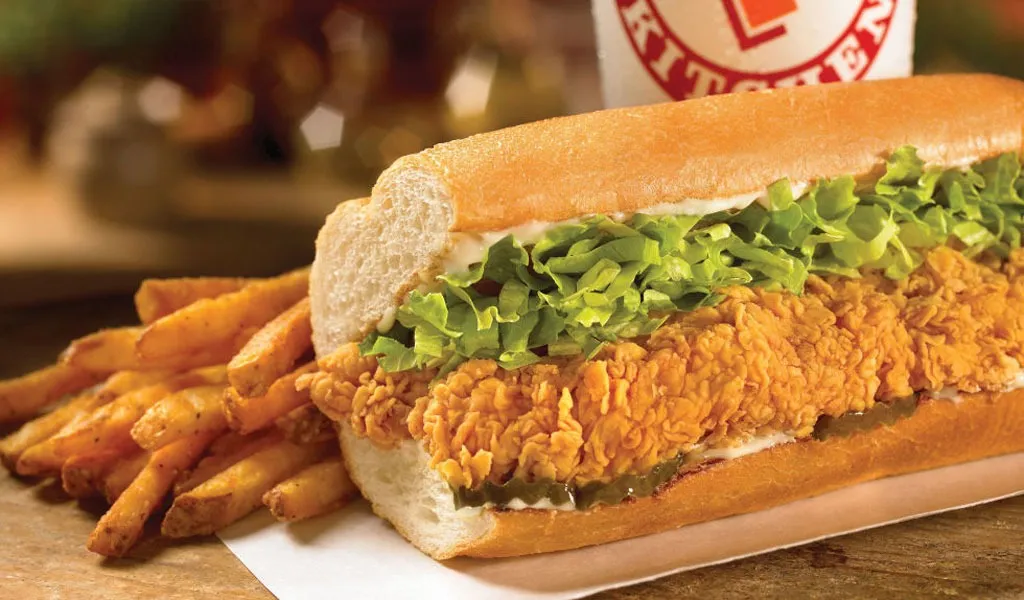
In Memoriam: the Popeyes Chicken Po'Boy Sandwich

Before Popeyes introduced their iconic (and notorious) Classic Chicken Sandwich, there was another iteration on the menu, known as the Chicken Po'Boy Sandwich. 

The Popeyes Chicken Po'Boy was itself iconic. It was a french bread roll with shredded lettuce, mayonnaise, and pickles, with two Popeyes Handcrafted Chicken Tenders. The bread melted in your mouth, and the chicken was completely complemented by the wrappings and fillings of the roll. 

Unfortunately, before the Classic Chicken Sandwich was introduced, the Chicken Po'Boy was removed from the menu. This was a terrible development. Popeyes kept the Shrimp Po'Boy, which was similar but made with Popeyes Popcorn Shrimp, and was a really sad example of a Shrimp Po'Boy, relatively. The Chicken Po'Boy was so much better!


 The Classic Chicken Sandwich is really good, and has re-established Popeyes as the premier source for fast-food chicken in the country (even surpassing Chic-fil-a's offering). It's distinctive and tasty, putting the fried chicken to the forfront. 

The Chicken Po'Boy didn't forward the chicken. Rather, it absorbed the chicken into a whole that was easily eaten without actually realizing that it was centered around fried chicken

I loved the Chicken Po'Boy. (I wasn't the only person who did.)

As a side-note to my investigation into whether I could find a better Chicken Tender than Popeyes, I prepared a somewhat similar replica of the Chicken Po'Boy. This wasn't completely successful.

To start, I fired up the toaster oven, and put two tenders on a piece of aluminum foil and cooked them at 425F for 20 minutes. For this experiment, I used Publix Premium Whole Wheat Breaded Chicken Tenders.


Then, I put some garlic butter on a Publix Hoagie Roll. (The roll was more bstantial--chewy--than the French Bread that had been used by Popeyes. It added more taste than the roll that Popeyes had used.) I briefly toasted the roll, and then applied some pickles, some mayonnaise, and some shredded romaine lettuce. 


When the tenders were done, I put them on the bed of lettuce and then sprinkled on some French's Louisiana Hot Sauce. I used a knife to press the contents and folded the roll around it, then cut the whole in half.


The thing that became immediately clear upon biting into this concoction was that the Publix Premium Tenders are much more flavorful (in terms of overbearing taste) than what Popeyes tenders are, or do. The taste of the tenders on my attempted duplication was way too much, relative to the taste of the roll of the taste of the other contents. (I mentioned in a previous post how the Public Premium tenders had a bit of a "patina" of taste similar to an Angel Food Cake. Plus, there's quite a bit of taste in the breading, which seems more dominant in the sandwich than Popeyes tenders are.)

This was a really good sandwich, one that I would make and eat again. But it wasn't duplicative of Popeyes Chicken Po'Boy. To achieve a better duplication, I probably have to follow some of the online recipes I found, including:

Basically, there's too much extra flavor from the breading and presentation in the Publix Premium Tender. I need to find a tender with less flavor if I wish to recreate the Popeyes Chicken Po'Boy. 


In Search of a Better Chicken Tender

"I Love That Chicken." 

Every once in a while, I get a craving for some chicken from Popeyes Louisiana Kitchen. I prefer the Handcrafted Tenders, because they are less messy than actual chicken pieces (lending themselves to perhaps be eaten in the car), and because they are very easily dip-able in one of Popeyes sauces. (I particularly like the Bayou Buffalo sauce, although some of the other sauce flavors are pretty good, too.)

(Some of my readers will not be surprised to hear that my favorite Popeyes chicken a few years ago wasn't the tenders, but the Chicken Po'Boy Sandwich. It was easy to eat with one hand, and the combination of french roll, mayonnaise, pickles, and lettuce was to die for. I've written an appendage blog about trying to recreate that.)

The closest Popeyes to me, here in Fort Myers, is just about a mile away. But I've had some terrible experiences there, including messed up orders, extremely long waits, and even one time where they had "misplaced" my online order, causing me to hold up a line trying to help them to recreate it (since I had already paid). and causing some of the people in that line to get downright nasty. (I posted one of the only 1-star reviews I've ever written after that miserable event.) That was the last time I went to the relatively close Popeyes. 

Fortunately, there is another Popeyes across the Caloosahatchee River, in Cape Coral. It's about four and a half miles away, and my experience there has been better (although it's clear that fast food restaurants are having a hard time hiring and keeping good workers). It's also close to the Lowe's that I often go to, and there's the added bonus of a great view of the river and the Fort Myers waterfront (such as it is) coming and going across the bridge.
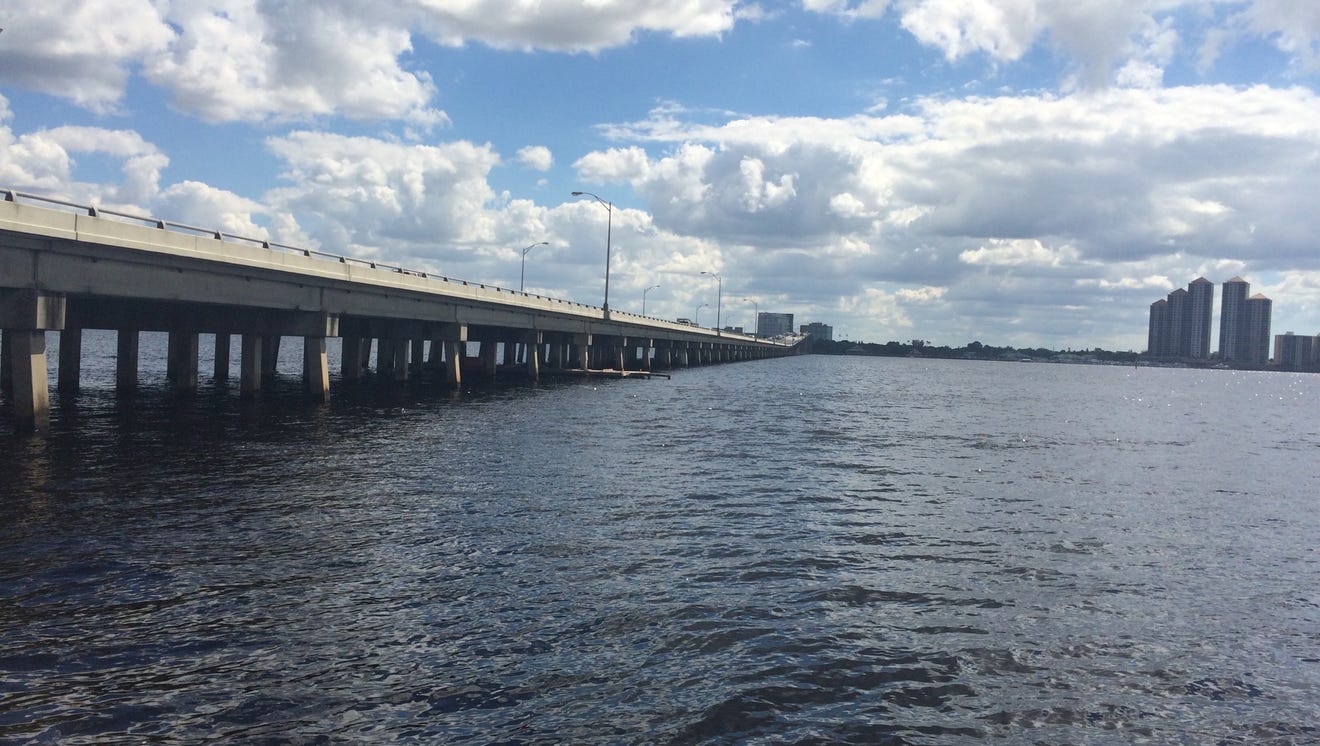
A five-piece Handcrafted Chicken Tenders Combo at the Cape Coral Popeyes is currently $11.29 plus tax. It includes five tenders, a biscuit, a side (the Cajun fries are a winner!), and a medium drink (It doesn't appear possible from the online menu to order the tenders themselves without the combo.) It's more than enough food for a meal, and I often save two tenders for later, along with the side and the biscuit. (Why DOES Popeyes include a biscuit with their meal, anyway? The only time I really like having the biscuit is when I order the mashed potatoes side, since it's great for sopping up gravy. It's also pretty good as a snack heated up with a little honey.) A three-piece tenders combo is certainly a sufficient amount of food, but when I'm anticipating the amazing taste and mouth feel of a crunchy, moist, tasty piece of the best chicken on the planet, it's hard to keep myself to ordering just three. (Plus, a three-piece combo is $10.19; and who wouldn't want two additional chicken tenders for only $1.10 more?!)

(As an aside, it's not REALLY the best chicken on the planet, although it's pretty close, and here in Florida I haven't found a good source of really good fried chicken, the best of which comes from Harold's The Fried Chicken King in Chicago. 


 Without access to Harold's, Popeyes is about the best there is. [This article rates a bunch of available fast food chicken tenders and concludes that Popeyes is far and away the best. This somewhat older article rates Popeyes second best behind Raising Cane's, also from Louisiana, although I haven't had the pleasure of trying them.)

(You don't like fried chicken?! Don't @ me.)

$11.29 for a five-piece tender combo is not really all that expensive, although it has certainly gone up in the last couple of years. But when I paid for my most recent combo, I thought to myself: "I bet I could make a pretty decent chicken tender at home for a lot less money!" Certainly there is the option of cooking from scratch, with chicken tenderloins, a nice batter, and some good oil. But who really wants used frying oil to have to deal with? (I do plan to check out a couple of recipes, and will let you know how that turns out.) I know that in the supermarket, there are many different types of prepared chicken tenders available--most frozen, although some fresh ones are available. Much easier to take a few out of the freezer and heat them up in the toaster oven to satisfy a craving, right? 

A Taste Test Comparison

So I decided to do a little comparison: Popeyes tenders vs. a few of the available options at my local Publix supermarket. I didn't really expect the supermarket tenders to be better than Popeyes, or even close to equivalent. But maybe something is "good enough." (Given that the tenders are typically dipped in a flavorful sauce, maybe the quality of the tenders themselves isn't all that important?)

As I mentioned, there are a lot of options available. Many of them seem marketed at parents of hungry kids. (Dinosaur shapes? I know at least a few youngsters who won't eat anything BUT chicken strips!) Also, some of the brands seem to have multiple "flavors" available. Not surprisingly, Tyson has many different kinds of frozen chicken pieces (including their Any'tizer brand). I found an online article that suggested that the Tyson's Southern Style Breast Tenderloins was the best, so that was the first candidate I chose.

There were a number of Perdue branded options, but the one that caught my eye was the Chicken Breast Strips, which come fresh ("never frozen"). These aren't exactly tenderloins, and in fact really weren't comparable to the others, as you'll see below.

The other option that was the closest to what I was looking for ("tenderloins") was Publix's own Premium Whole Grain Breaded Chicken Tenderloins. To round out the comparison, of course I had to include Popeyes, which is what I was craving in any case.

So we had our contenders (for what might just be the first round of comparison):

  • Popeyes Handcrafted Tenders, $11.29 for five pieces (purchased cooked, then refrigerated overnight and reheated in the oven)
  • Tyson's Southern Style Breast Tenderloins, $12.89 for 25 oz, frozen, then cooked in the oven
  • Publix Whole Grain Breaded, $12.49 for 24 oz, frozen, then cooked in the oven
  • Perdue Chicken Breast Strips, $4.99 for 12 oz, fresh, then frozen overnight, then cooked in the oven

The Popeyes tenders were left over from a five-piece that I had purchased the day before. As always, the tenders just home from the store were incredibly good while fresh and hot. Refrigerating a couple overnight certainly hurt their overall appeal a bit (see below). 

The reason I froze the Perdue Strips is because I wanted a fair comparison with the other frozen options, and also because I know I wasn't going to eat all of them in the next few days. This might have been much better if I had cooked it from fresh (and for that reason I might have to include them in a future comparison).

One question that arose was how to account for the slightly different cooking directions. Both the Tyson's and the Publix called for a 425F oven for 18-20 minutes. Perdue wanted a 400F oven for 10-12 minutes (or two more minutes if frozen). Popeyes, of course, didn't come with directions for how to reheat.I decided to use a 425F oven for 20 minutes, and to slightly compensate for the temperature by withholding the Perdue strips until 9 minutes had passed, and then putting in the Popeyes with five minutes left. This way they'd all be done at the same time.

Ingredients?

The contenders differed from each other in a number of respects, and I was curious whether their lists of ingredients might account for some of those differences. 


 The photos aren't perfect, but you can see the following significant differences:

  • Tyson's lists "buttermilk powder" while the other two don't.
  • All three have sugar, although Tyson's lists "dextrose."
  • Both Perdue and Publix include "yeast," while Tyson's does not.
  • Perdue and Tyson have some corn meal or corn flour, while Publix does not.
  • Publix lists "whole wheat flour" (not surprising given its name) while Tyson's only lists "wheat flour," and Perdue lists both regular and whole wheat flour.
  • Publix and Tyson say their breading is "set in vegetable oil" (which I guess means they've been fried?) while Perdue doesn't say that.
  • Publix doesn't have water as an ingredient, but it does list "chicken broth" (which I assume has water in it).
  • Both Perdue and Tyson list garlic, black pepper, and paprika explicitly, while Publix only lists "natural flavors."
  • All have salt. Perdue (oddly) adds vinegar. 
  • Popeyes, of course, doesn't list ingredients on their packaging at all. A brief search of Google finds a lot of guesses as to what they put into their tenders. Some people say they are marinated in buttermilk before being breaded and fried. Most assessments include garlic, some cayenne pepper, . Everyone assumes there's some hot sauce (maybe even in the "mild" version), and most suggest some corn flour or cornstarch.. Many think there's probably some egg (used to "set" the breading?). (If you search for ingredients online, you can download a PDF purportedly from Popeyes that lists the very long list of ingredients. Also, this article recounts one person's attempt to recreate the recipe as close as possible, with some interesting details!) What's pretty clear is that the tenders arrive at each Popeye's location having been already prepared, and already fried once.

"Unboxing"

At around 17 minutes or so, I could smell the tenders cooking, and by 20 minutes when I took them out of the oven, they were all pretty hot. 


(The Biscuit was leftover Popeyes.)

The first thing I did was cut each in half for a photo. 

First was the Tyson's, which definitely looked most yummy out of the oven:

Next, the Publix, which had a slightly darker shade that suggested its "whole wheat" designation (or perhaps reflected the presence of chicken broth?):

Third, the Perdue, which, as you can see, just didn't compare in terms of how substantial the breading is, and which presented a less appealing piece of chicken:

And finally, the Popeyes, which of course looked awesome (although not quite as good as the previous day):


The second thing I did was cut off a big piece of each to eat without any sauce. The third thing was to dip each in some leftover Buffalo Bayou sauce. Finally, I finished them all, using repeated tastings to refine my judgment.


My Findings

Let me start with the bottom line. Popeyes, even though the tenders were slightly less delicious and a little more dry than when they were freshly cooked the day before, were certainly the best. Popeyes is especially good at "holding" the Buffalo Bayou sauce in the folds of its coating.

Both the Tyson's and the Publix tenders were quite good: crunchy coating, with moist and flavorful chicken. They differed very slightly in their taste: the Tyson's had a very slight and pleasant tang to it, while the Publix had a somewhat odd accompaniment to the primary taste: a bit of sweet dough taste that was reminiscent of angel food cake(?)! This extra Publix patina wasn't really objectionable, and was certainly too subtle to taste when doused in sauce. Plus, while the Publix Premium tender was slightly moister than the Tyson's, I'd definitely choose the Tyson's Southern Style for its slightly better taste.

The Perdue strip just couldn't compete with this crowd. While it was purchased fresh, I froze it so it was like the others, possibly removing its one advantage. Perdue makes no claim to actually be a "tender," from a chicken tenderloin. It very much was just a chicken strip. Its breading was not crunchy, just a little chewy, and the chicken had no where near the flavor that the true tenders did. Plus, there was a slight institutional taste, reminding me of the chicken patties that we used to be served in the cafeteria a school. I simply don't see a situation in which I would choose Perdue Chicken Breast Strips as my option: better to buy my own strips and slice them and bread them.

This comparison certainly room to include some additional options next time: perhaps the house brand of another supermarket such as Whole Foods?, and some of the alternative options available, including organic tenders and "tenders" made from cauliflower. It's quite possible that one of those other options would be good enough to surpass the Tyson tenders. (We'll see.)

The real question that I'm left with after concluding my tasting here is whether the Popeyes tenders are sufficiently better than the other options to choose them every time. There is the issue of convenience: if I don't have anything in my freezer and find myself craving tenders, do I drive 15 minutes to Popeyes and be almost immediately gratified, or do I go and get some frozen ones in the supermarket and head home to cook them in the oven? The prospect of immediate gratification with a better option than the others means that Popeyes will continue to win out in these circumstances. 

However, I now have about 25 tenders in my freezer, including some that aren't very good but some that certainly are passable. If I keep my freezer well stocked, maybe I'll never drive over the Caloosahatchee to Popeyes again. Or maybe not.